Custom Transaction Processes in Sharetribe
Transaction process design is one of the most important parts of a Sharetribe marketplace because it controls what happens from the first user action to completion and payout.
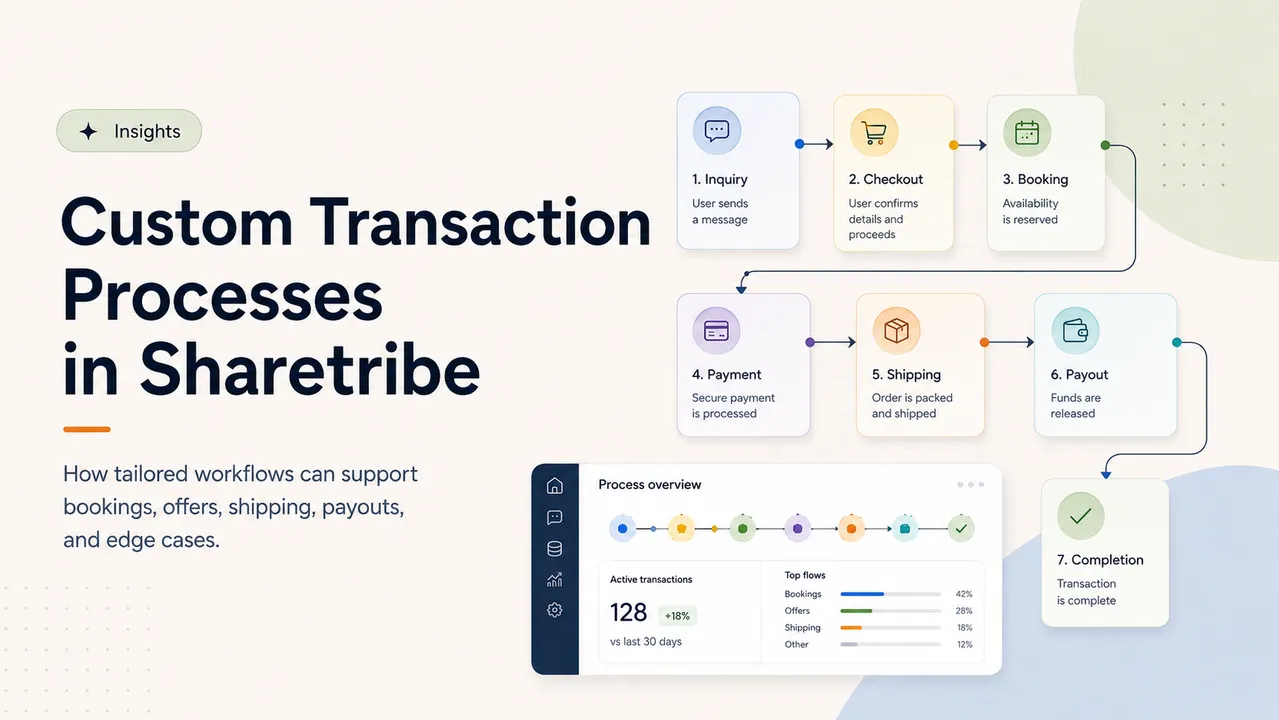
What a transaction process controls
A transaction process defines the states and transitions of a marketplace order or booking. It can control inquiry, request, acceptance, payment, delivery, cancellation, completion, review, and payout behavior.
This logic affects the interface users see, the emails they receive, the payment timing, the messaging context, and what admins can inspect later.
Purchase flows vs booking flows
A purchase flow usually moves through cart or checkout, payment, fulfillment, delivery, and completion. A booking flow often needs availability, request approval, date changes, time zones, cancellation windows, and no-show handling.
Trying to force both models into the same workflow can create fragile logic. The transaction process should match the marketplace's real supply and operational model.
Offers, inquiries, and custom states
Some marketplaces need negotiation before checkout. Buyers may send offers, sellers may counter, or both sides may discuss details before a transaction starts.
Custom states can support this without losing clarity. The product should always show what is waiting on the buyer, what is waiting on the seller, and what action moves the transaction forward.
Shipping and delivery transitions
Product marketplaces often need shipping labels, tracking numbers, delivery confirmations, and status updates. These events should be represented in the transaction process so users and admins understand the order state.
Integrations with shipping tools can automate parts of this flow, but the marketplace still needs clear UI for exceptions such as failed labels, delayed packages, or address issues.
Payout timing and release logic
Payout timing is a trust decision. Some marketplaces release funds after seller acceptance, some after service completion, some after delivery, and some after a dispute window.
The transaction process should make the payout rule explicit. This helps sellers understand cash flow and helps admins resolve disputes with a clear source of truth.
Disputes, cancellations, and refunds
Edge cases are part of marketplace reality. Cancellations, refunds, partial refunds, reschedules, disputes, failed payments, and late delivery should not feel like afterthoughts.
Design these transitions before launch. The more money, time, travel, or trust involved in the transaction, the more important exception handling becomes.
How to avoid fragile transaction logic
Keep state names clear, avoid unnecessary transitions, document who can trigger each action, and test every payment and cancellation path before launch.
A strong transaction process is understandable to users, sellers, admins, and developers. If the workflow requires a long explanation to operate, it probably needs simplification.
Key takeaway
Custom transaction processes make Sharetribe marketplaces fit real business models. The goal is not complexity. The goal is a clear workflow that can handle the normal path and the edge cases.
Related articles
Keep reading

AI + Sharetribe: Practical Automation for Marketplaces
Use AI to improve discovery, support, moderation, and operations in real marketplace workflows.

Sharetribe Mobile Template: What to Build First
A practical roadmap for launching a mobile marketplace with the right flows, screens, and priorities.

Sharetribe Marketplace Development Guide
Core architecture, listing flows, transactions, and extensions for building a scalable marketplace.
Work With DevsCrew
Building a marketplace or AI product?
We help founders and teams design, build, and scale Sharetribe marketplaces, AI features, mobile apps, and complex product workflows.