Personify
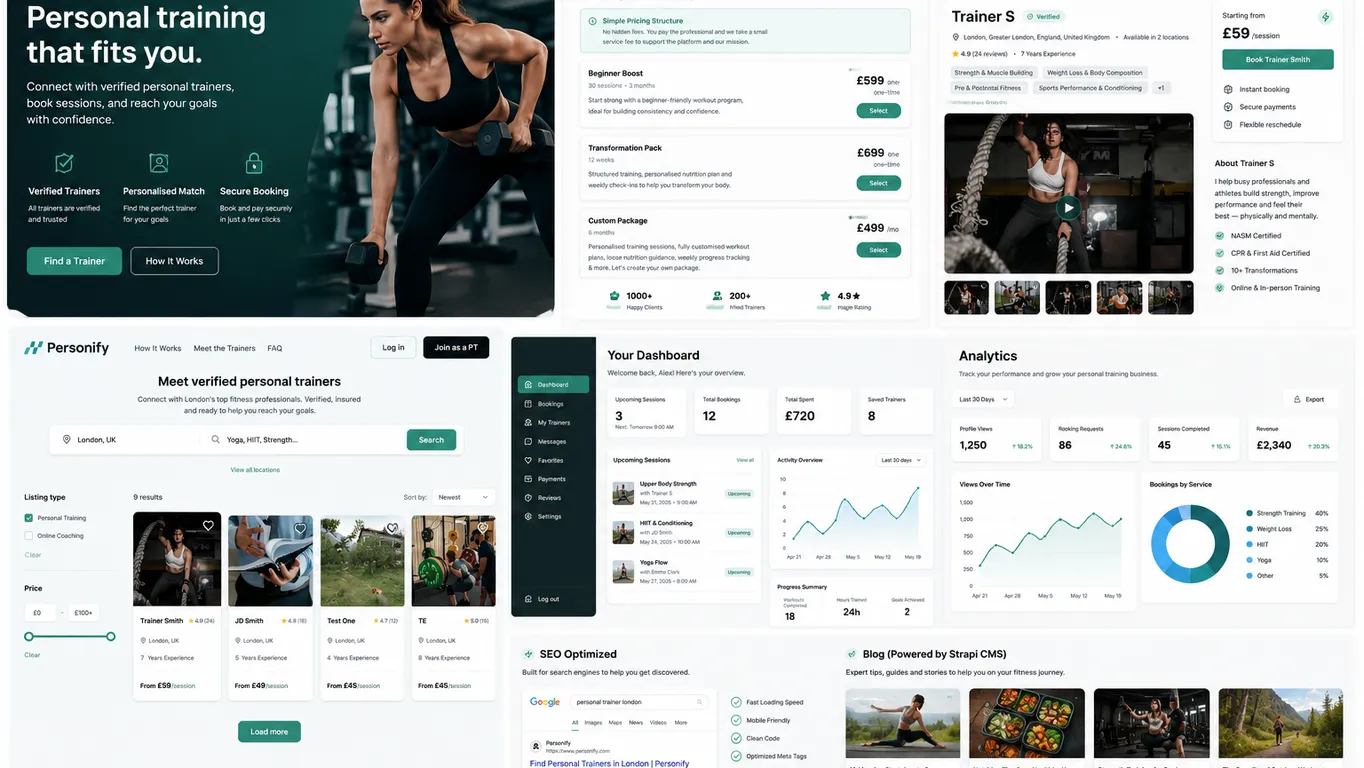
Verified personal trainer marketplace with packages and booking
Verified personal trainer marketplace with trainer profiles, packages, booking, and analytics.
Platform Type
Trainer Booking Marketplace
Scope
Marketplace product, dashboards, analytics
https://personify.com
Visual Showcase
Platform in Detail
Every screen designed for clarity, trust, and conversion.
https://personify.com
Product Overview
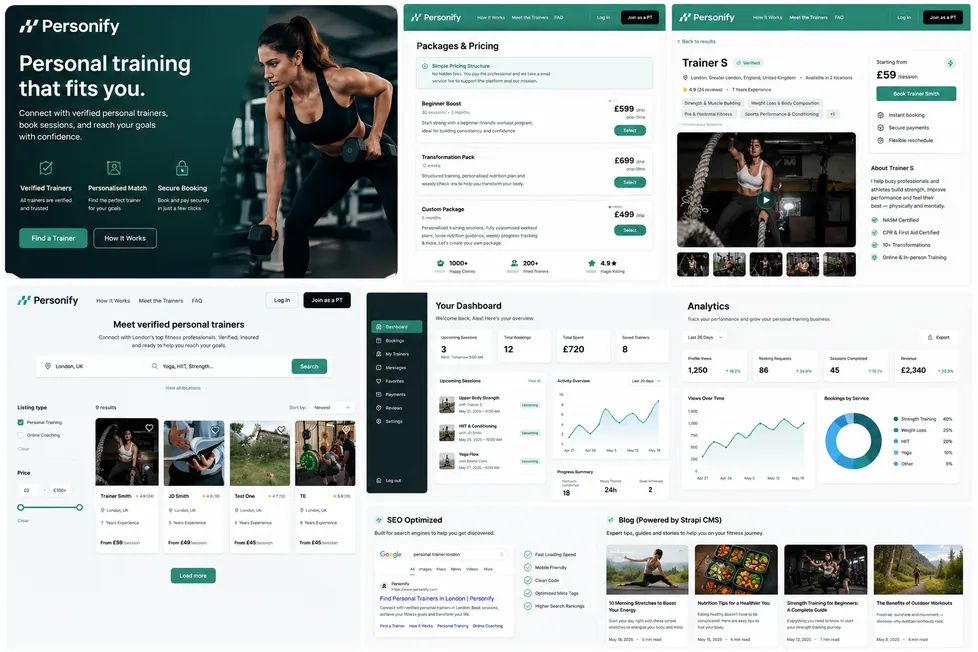
Personify turns trainer discovery into a structured marketplace experience with profiles, packages, booking, and dashboards.
Verified Trainers
Packages
Booking Dashboard
Analytics
Booking
Analytics Dashboard
What We Designed & Built
Platform Features
Verified Trainers
Trainer cards and profiles with ratings, experience, services, and trust signals.
Packages
Structured training offers for beginner, transformation, and custom coaching.
Booking Dashboard
Client and trainer views for upcoming sessions, messages, and progress.
Analytics
Views, booking requests, sessions, revenue, and service performance reporting.
User Experience
Marketplace User Journey
Discover Options
Arrives on the platform and understands what can be booked.
Search Availability
Uses location, dates, categories, or filters to narrow options.
Compare Results
Reviews listings, pricing, amenities, profiles, or policies.
View Details
Opens a detail page for richer context and trust signals.
Choose Slot
Selects dates, times, package, availability, or request type.
Confirm Booking
Completes payment, request, confirmation, or next-step flow.
Manage Details
Uses dashboards, messages, reschedules, or account tools.
Return & Rebook
Comes back through saved options, favorites, or repeat needs.
https://personify.com
The challenge
Building trust before users commit to a trainer
What We Built
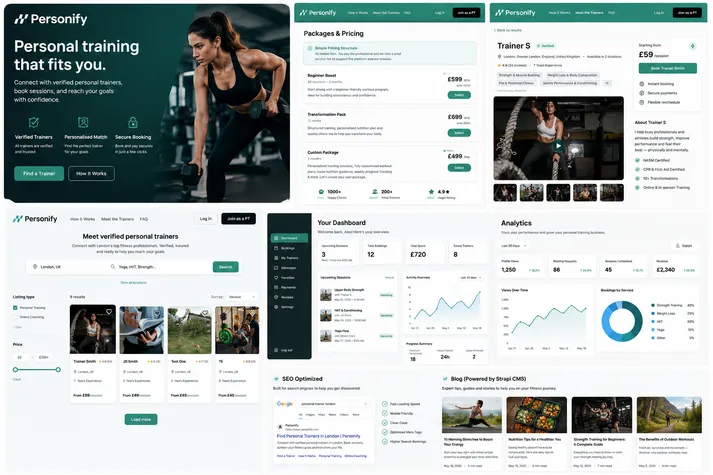
Choosing a trainer is a trust-heavy decision. Users need to compare credentials, experience, pricing, location or session type, availability, and reviews before they feel ready to book.
Business Impact
Personify turns trainer discovery into a structured marketplace experience with profiles, packages, booking, and dashboards.
Impact
What Changed After Launch
Impact 1
Improved trust and conversion with verified profiles and structured packages.
Impact 2
Gave trainers clearer business tools through dashboards and analytics.
Impact 3
Supported acquisition with SEO and content workflows instead of relying only on paid traffic.
Build something similar
Build a Web Platform Your Users Can Trust
From marketplaces and booking systems to SaaS dashboards and custom portals, we design and build scalable web apps with clean UX and strong business logic.